Mode and time commitment
- Mode
- Live Online & Campus Immersion
- Duration
- 18 Months
Offered by Goa Institute of Management
An 18-month Executive PGDM from Goa Institute of Management for experienced healthcare and operations professionals, delivered via live online classes with applied casework and campus immersions to build leadership, analytics and cross-functional decision-making skills.

Goa Institute of Management
The Executive PGDM in Healthcare Management is an 18-month programme that blends GIM’s core management curriculum with specialised healthcare subjects — operations, finance, public health, healthcare information systems, quality and regulation. It is designed for working professionals and delivered through live online sessions on the TEEL platform, supplemented by applied projects, cases and analytical exercises.
The programme includes three short campus immersions (total four days) at the Goa Institute of Management to enable experiential learning, faculty interaction and industry exposure. Outcomes focus on leadership, cross-functional decision-making, healthcare analytics and translating classroom learning into immediate workplace impact.
Key highlights and core differentiators that set this program apart.
18-month executive management programme
Live interactive online faculty sessions (TEEL platform)
Specialised healthcare management curriculum covering operations, analytics, quality and regulation
Application-oriented learning through cases and projects
Two 2-day campus immersions (face-to-face experiential learning)
Industry and practitioner perspectives; diverse peer networking
Core capabilities, strategic skills, and managerial frameworks you will acquire.
Essential delivery mode, timeline, and candidate eligibility at a glance.
Comprehensive breakdown of course modules, masterclasses, and hands-on projects.
- Process Mapping: Process Analysis
- Facilities Layout: Product and Process Layouts
- Quality Management: Lean, Six Sigma, • Control Charts
- Forecasting: Moving Average, Exponential Smoothing
- Inventory Management: Economic Ordering Quantity, Newsvendor Problem
- Queuing Theory: Queuing Models
- Optimization: Linear Programming, Integer Programming
- Project Management: CPM, PERT
- Demand for accounting information: Users of financial accounting information.
- Accounting concepts: Business entity, Money Measurement Concept, Going Concern Concept, Cost Concept, Accrual Concept, Realization Concept, Dual Concept, Periodicity concept, Matching Concept
- What is the Accounting Equation: Assets, Liability, and Equity?
- Balance Sheet or Statement of Financial Position: Overview, Definitions of Assets, Liabilities and Owner’s Equity, Current vs non-current assets, Tangible vs intangible assets, Preparation of balance sheet
- Income Statement or Statement of Profit and Loss: Overview, Difference between cash basis accounting and accrual basis accounting, Definitions of Revenues, Cost of Sales, Gross Margin, Other Expenses, Net Income.
- Concepts: The Accounting Period Concept, Conservatism Concept, Realization Concept, Matching Concept, Consistency Concept, Materiality Concept, Preparation of Income statement, Relationship between Balance Sheet and Income Statement
- Long-Lived Assets: Asset versus Expense, Depreciation, Different depreciation calculation methods, Amortization and intangible assets.
- Inventory Valuation: LIFO, FIFO, and weighted average methods of valuation.
Cash Flow Statement.
Introduction to Integrated Reporting
- Financial Statement Analysis: Ratio analysis, Liquidity ratios, Structural ratios, Gearing ratios, Profitability ratios, Shareholder’s ratios
Health, Disease and the Determinants of Health
Epidemiological tools and applications
Dynamics of disease transmission
Population-level disease measures and data sources
Introduction to epidemiological study designs for evidence in practice settings
Health Transition
Chronic disease epidemiology
Indian public healthcare delivery system
Sustainable development and public health
Ethics in Public Health
- Customer Perceived Value and Psychology of buying: value proposition, consumer and buyer buying behaviour, factors affecting consumer behaviour
- Marketing Research: Need, Scope, Types, Qualitative/Quantitative/Questionnaire design
- Marketing Strategy: 7 C framework, value chain analysis, BCG/GE, Ansoff Matrix, PESTEL
- Segmentation, Targeting & Positioning: POP and POD
- Designing and managing products and Services: product differentiation, product life cycle, new product development, branding, pricing
- Marketing Channels: distribution, retailing, promotion & communication, global marketing
Introduction to Management Accounting and decision-making process
Classification of Costs
Cost Behaviour and Cost-Volume-Profits Analysis
Overhead Allocation & Activity Based Costing
Budgeting and Variance Analysis
Short term decision making
Introduction to Health Information System (HIS)
Healthcare data sources
Public Health Surveillance and Public Health Informatics
HIS for Communicable Diseases and Non-Communicable Diseases
- HIS for Policies & Programs: Clinical Practice Research Datalink (CPRD), UK
Digital Health & Landscape of Healthcare IT in India: Ayushman Bharat Digital Health Mission (ABDM)
Electronic Health Records and Sub-modules
Clinical Decision Support Systems (CDSS), Cloud Computing in Healthcare
EHR related Healthcare IT business opportunities
EHR: Project Planning and Change Management for Digital Health
Safety, Ethics, and Regulations Related to Digital Health
- NDHM Registries: ABHA, Professional and Facilities
- Introduction to hospitals: roles, classification, stakeholders
- Management and Organization: objectives, structure, departmentation, managerial functions
- Latest business practices: home healthcare, virtual care, medical tourism, AI, digitization
- Regulation and standards: laws, accreditations
- Support departments: ADT, medical records, CSSD, food supply, housekeeping, pharmacy, stores, security
- Organization-wide functions: infection control, safety, quality, efficiency
Human Resource Planning, Job analysis and Design, Recruitment and Selection, Training and Development, Performance Management, Compensation
Decent Work Agenda and Resilient Organizations
Occupational Health and Safety Management
Health Promotion and Workplace Health Assessment
Understanding Self
Perception and Attribution
Attitudes
Motivation and Applied Motivation (job redesign)
Personality, Leadership, Team development
Power, Politics and Conflict
Emotions, Stress and Coping, Diversity in Organisation
- Introduction to research: objectives, types, scientific thinking
Research design, literature review and hypothesis testing
Sampling and scaling techniques; data collection methods
- Use of software for data analysis: Excel, SPSS; qualitative research and N-vivo
Introduction to Financial Management; Time Value of Money
Financial systems; capital budgeting (NPV, IRR)
Capital structure theory and policy
Working capital and cash management
Receivables management and credit policy
Introduction to pharmaceutical industry, trends and challenges
Quality and regulatory compliance (cGMP)
Marketing, strategy and operations case studies; Rx to OTC strategy
- Medical devices and med-tech: market, B2B purchase decisions, KOL management
Basics of health economics; demand and supply in healthcare
Production and costs, healthcare markets and pricing
- Economic evaluation techniques: CMA, CBA, CEA, CUA; HALYs, QALYs, DALYs
Health insurance overview, financing and social schemes in India
Underwriting, pricing, reserving and actuarial techniques
Claims management, TPAs and hospital tie-ups
Customer service, fraud detection and reinsurance models
Ethics and Business Ethics: Perception, Bias and Personal Values, Framework for ethical decision making, Ethics and Governance of AI for health
- Corporate governance: role of board, governance codes
Organizational effectiveness, environment and lifecycle
Organizational structure, culture and design tools
Organizational change, knowledge management and innovation
Introduction to Healthcare Analytics
Hands-on experience in R and Tableau Prep
Data pre-processing, cleaning and visualization
- Introduction to machine learning: predictive models and clustering
- Industry environment and business models (case studies: Apollo, Max, Fortis, Aster, Dr. Reddy’s)
- Emerging models: medical tourism, home healthcare, telemedicine; sustainability and ethics
Basics of strategy and strategic management process
Industry and firm-level analysis
Business-level and corporate-level strategy; implementation and control
Quality concepts and determinants; healthcare quality models (Donabedian, HEALTHQUAL)
Accreditation, patient safety, quality planning and improvement approaches (PDCA, Six-Sigma, Lean, FMEA)
- Tools: Pareto, SPC, Root cause analysis, Fish-bone, 5S, House of Quality; certifications (WHO cGMP, FDA, MHRA)
- Technology innovations in healthcare: AI/ML, blockchain, biomedical sensors
Evidence-based and personalized medicine, nanotechnology, microfluidics
Medical robotics, AR/VR, digital twin, 3D printing and emerging tech
Regulatory environment and overview of healthcare laws
Laws governing qualifications, patient management, medications, environment safety
Laws relevant to pharmaceuticals and medical devices; contracts and business law (Indian Contract Act, Companies Act, Sale of Goods Act)
Payment risk, FEMA, consumer protection, IPR and compliance
Format, class schedules, campus immersion details, and evaluation criteria.
4 Days of Immersive Learning. Meaningful Professional Connections.
The programme includes three campus immersions of 2 days each, totalling 4 days at the Goa Institute of Management campus. The immersions complement the online learning journey with face-to-face academic engagement and experiential learning.
Eligibility criteria, work experience requirements, and admission steps.
Educational Qualification
Work Experience
- Self-Sponsored: Submit the application and required academic and professional credentials for eligibility and profile screening. - Corporate Nominations: Applications may also be considered through corporate nominations.
Key application deadlines, batch commencement dates, and intake schedules.
| Application Deadline | 12 February 2027 |
|---|---|
| Programme start date | 28 February 2027 |
| Instalment 2 due | 6 March 2027 — Instalment date as given: 6th March, 2027 |
| Instalment 3 due | 6 June 2027 — Instalment date as given: 6th June, 2027 |
| Instalment 4 due | 6 September 2027 — Instalment date as given: 6th September, 2027 |
Tuition fees, flexible installment schedules, and available financing options.
| Fee or instalment | Amount | Due date / terms | Notes |
|---|---|---|---|
| Application Fee | ₹2,500 | At the time of Application | Application fee is separate from programme fee; amounts excluding GST |
| Total Programme Fee | ₹3,50,000 | — | GST at prevailing rates will be charged additionally; programme fee excludes application fee |
| Instalment 1 | ₹87,500 | At the time of Admission | Amount excluding GST |
| Instalment 2 | ₹87,500 | 6th March, 2027 | Amount excluding GST |
| Instalment 3 | ₹87,500 | 6th June, 2027 | Amount excluding GST |
| Instalment 4 | ₹87,500 | 6th September, 2027 | Amount excluding GST |
Common queries about the program, admissions, curriculum, and policies.
The Executive PGDM in Healthcare Management is an 18-month programme. It combines live online learning with three 3-day campus immersions, totalling 9 days.
Successful participants will be awarded the Post Graduate Diploma in Healthcare Management by Goa Institute of Management upon fulfilling the academic requirements prescribed by the Academic Council of GIM.
At least 3 years of work experience is mandatory.
Candidates must hold a bachelor’s degree with at least 50% marks or equivalent CGPA in any discipline from a recognised university. The degree must be recognised by the Association of Indian Universities (AIU).
Yes. The eligibility criteria allow a bachelor’s degree in any discipline. Candidates with relevant work experience and additional qualifications are given preference.
The sessions are delivered on the TEEL interactive learning platform. Lectures are scheduled every Saturday and Sunday, with timings to be confirmed. The programme also includes three campus immersions of three days each.

Indian Institute of Management Calcutta
Deadline passed12-month executive programme (live online with campus immersions) that equips healthcare professionals—hosp...
Indian Institute of Management Calcutta
Tech partner: TimesPro
About the primary institute
Founded in 1993, Goa Institute of Management (GIM) is a private autonomous business school located in Sanquelim, Goa. The institute offers a range of postgraduate management programmes including PGDM, specialised PGDMs in Healthcare, Big Data Analytics and Banking, Insurance & Financial Services, a part-time PGDM for working professionals, and a Fellow Programme in Management (FPM). GIM combines industry-focused pedagogy, applied labs (finance, data and behavioural labs), and a strong placement record to prepare students for managerial careers.
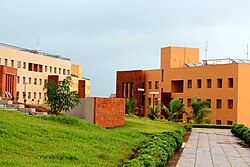
Set on a 50-acre ecological campus at Sanquelim, GIM emphasises sustainability, industry engagement and experiential learning. The school is accredited by national and international bodies (including AMBA, AICTE, NBA and SAQS) and maintains a network of international partner universities for exchanges, consulting bootcamps and immersion programs. GIM is notable for its leadership in responsible management education, incubation (Atal Incubation Centre), and student-driven social initiatives such as Give Goa.