Mode and time commitment
- Mode
- Live Online & Campus Immersion
- Duration
- 7 Months
Offered by Indian Institute of Technology Delhi
7‑month live weekend Executive Programme by CEP, IIT Delhi for graduates and working managers that builds strategic project management skills—risk & resource control, agile execution, Primavera hands‑on and leadership to deliver complex projects.

Indian Institute of Technology Delhi
Master advanced project management across the full project lifecycle through a seven‑month, live‑online Executive Programme delivered by CEP, IIT Delhi. The programme combines interactive weekend sessions, Harvard case studies and hands‑on exposure to Primavera P6 to teach planning, scheduling, budgeting, risk control and agile execution.
Designed for working professionals and managers, the curriculum emphasises strategic alignment of projects with organisational goals, resource optimisation and stakeholder management. You will practice portfolio and financial evaluation, apply critical‑chain and earned‑value techniques, and lead high‑performance and virtual teams.
Outcomes include the ability to plan, monitor and control complex projects, adopt agile methods where appropriate, manage outsourcing and contracts, and use data‑driven analytics to make informed project decisions—culminating in an e‑certificate from CEP, IIT Delhi upon meeting assessment and attendance criteria.
Key highlights and core differentiators that set this program apart.
CEP (IIT Delhi) e‑certificate awarded
Live weekend Direct‑to‑Device sessions tailored for working professionals
Hands‑on Primavera P6 exposure and Harvard case‑based learning
QS‑ranked IIT Delhi faculty and collaborative peer learning
Flexible weekend format (Saturday, 3.5 hours)
Core capabilities, strategic skills, and managerial frameworks you will acquire.
Essential delivery mode, timeline, and candidate eligibility at a glance.
Comprehensive breakdown of course modules, masterclasses, and hands-on projects.
Project Lifecycle
Current drivers of Project Management
Project Governance
Project Management Processes and their classification
Project Integration Management
Learning Outcome
Understand the foundational principles, lifecycle, and governance of projects; Familiarise with key project integration processes.
Strategic Management Process
Project Portfolio Management
Financial Models to evaluate project feasibility
Managing the Portfolio system
Project Management Structure, Organization Culture
Learning Outcome
Learn to align project management with organisational strategy; Apply portfolio and financial models for project selection.
Project scope and Priorities
Work Breakdown Structure (WBS) and integration
Responsibility Matrices
Estimating Project Times and Costs
Methods for estimation
Critical Path Method
Crashing in CPM
Project evaluation review technique
Monte Carlo Simulation methods in Project Management
Learning Outcome
Develop project scope, WBS, and schedules; Estimate time, cost, and analyse risks using tools like CPM and Monte Carlo simulation.
Resource Scheduling Problem
Types of resource constraints
Classification of projects based on resources
Resource Allocation Methods
Benefits of Scheduling resources
Multiproject resource schedules
Developing Project Cost baseline
Learning Outcome
Gain proficiency in handling resource constraints and multiproject schedules; Understand resource allocation and cost baselines.
Theory of constraints
Critical Chain solution to Project scheduling
Critical chain activity network
Critical Chain Project Portfolio Management
Learning Outcome
Apply Theory of Constraints to scheduling; Implement Critical Chain methodology for improved project execution.
Cost Management basics, Cost Estimation
Creating a project budget
Top-down and Bottom: up budgeting
Activity based costing
Budget uncertainty and risk management
Risk management process
Risk Breakdown Structure
Contingency Planning
Opportunity Management
Change control Management
Risk Management Tools
Risk Mitigation Strategies
Learning Outcome
Master cost estimation, budgeting methods, and risk/uncertainty management through structured budgeting and control techniques.
Basics of financial management
Options, futures and contracts, Real options, Real options in project management
Advantages of using real options in project management
Learning Outcome
Apply real options thinking to enhance strategic decision-making and flexibility in project investment evaluation.
Project leadership
Managing Project Stakeholders
Social network building
Team development models
Building high performance project teams, Managing virtual project teams
Project team pitfalls
Learning Outcome
Build and manage effective, high-performance, and virtual teams; Learn stakeholder and leadership engagement strategies.
Enhancing Virtual Communication through Digital Collaboration Tools
Virtual Project Team Management Strategies
Best Practices for Digital Presentations and Reporting in Projects
Global Issues in Project Management
Learning Outcome
Use digital tools to enhance collaboration in distributed teams; Apply best practices for virtual project management.
The Planning-Monitoring-Controlling cycle
Monitoring Project Performance
Earned Value analysis and Indexes
Purposes of Project Control
Control of change and scope creep
Learning Outcome
Learn to monitor and control project performance using tools like EVA; Understand scope change control and feedback cycles.
Traditional versus Agile methods
Steps in Agile PM
- Agile PM in action: Scrum, Applying agile PM to large scale projects, Limitations
Learning Outcome
Differentiate traditional and agile methods; Implement agile practices such as Scrum in real-world projects.
Transactions cost theory and the theory of firms
Outsourcing project work
Best practices in outsourcing
Managing customer relations
Contract Management –
Fixed Price contracts
Cost Plus Contracts
Contract Management Control System
Learning Outcome
Understand outsourcing strategies and contract types; Manage vendor/customer relations and contract performance.
Data analytic methods in project management
Data analytics applied to Project Selection
Resource Assignment, Resource Scheduling, and Project risk management
Use Cases of Data driven decision making in project management
Learning Outcome
Leverage analytics for project selection, resource planning, and risk mitigation; Apply data-based decision-making approaches.
Applications of AI and Machine Learning Techniques in Project Management
Use Cases for Machine Learning and AI for issues in project Management
Impact of Digital Tools and Software on Project Efficiency (e.g., Jira, Asana)
Learning Outcome
Explore AI/ML applications and digital tools for improving project efficiency and decision quality.
Project Audit
Project Audit life cycle
Audit report
Types of project closure
Wrap-up closure activities
Post-Implementation evaluation
Retrospectives
Learning Outcome
Learn to conduct audits, manage project closure, and derive insights through post-implementation reviews.
| Personal Branding - I | Introduction to networking platformsProfile creation on professional networking platforms like LinkedIn, Lunchclub, etc. |
|---|---|
| Personal Branding - II | LinkedIn Profile ReviewHow to create personal brand presence on LinkedIn?How to increase post engagement on LinkedIn?Active networking |
| Business Communication - I | Role and importance of effective communication as a leaderThe art of providing constructive feedback for successful team |
| Business Communication - II | Importance of non-verbal communicationKey elements of executive body language |
| Job Search Strategy - I | Resume CreationImportance of creating ATS-friendly executive resumeExecutive resume sections and structureTailoring resumes for different roles and industriesWrite a powerful resume that stands out from the competition |
| Interview Preparation | Pre-Interview Etiquettes: top-down approach and pre-interview tipsIn-Interview Etiquettes: self-elevator pitch, understanding interviewer mindset, groomingPost-Interview Etiquettes: reflecting on feedback, relationship building, follow-up |
Format, class schedules, campus immersion details, and evaluation criteria.
Saturday · 10:00 AM – 1:30 PM · Weekly · Live online sessions (Direct‑to‑Device)
One full day (6-7 hours) of Campus Immersion (optional) at the conclusion of the programme.
Travel and accommodation charges will be borne by the learners. IIT Delhi will not be responsible for the same.
Eligibility criteria, work experience requirements, and admission steps.
Key application deadlines, batch commencement dates, and intake schedules.
| Application Deadline | 7 November 2026 |
|---|---|
| Program Start Date | 6 March 2027 |
Tuition fees, flexible installment schedules, and available financing options.
| Fee or instalment | Amount | Due date / terms | Notes |
|---|---|---|---|
| Programme Fee | ₹1,15,000 | — | Exclusive of GST (GST @18% applicable). Shown as ₹1,15,000 in Fees panels. |
| GST | ₹20,700 | — | GST @18% on the programme fee where applicable. |
| Application Fee | ₹1,000 | At the time of application | Application fee (₹1,000) plus 18% GST is non‑refundable and non‑transferable; separate table shows ₹1,000; alternate table shows ₹2,000 – check provider confirmation. |
| 1st Instalment | ₹40,000 | On acceptance of offer | Amount exclusive of GST per fee schedule |
| 2nd Instalment | ₹37,500 | 6 March 2026 | Amount exclusive of GST per instalment schedule |
| 3rd Instalment | ₹37,500 | 6 April 2026 | Amount exclusive of GST per instalment schedule |
Common queries about the program, admissions, curriculum, and policies.
The CEP, IIT Delhi's Executive Programme in Advanced Project Management course runs for seven months. Classes are conducted online every Saturday for three and a half hours. The format is designed to accommodate working professionals while covering comprehensive project management tools, methods, and real-world applications through a structured academic curriculum.
Any graduate with at least a (10+2+3) qualification from a recognised university can apply. The CEP, IIT Delhi's Executive Programme in Advanced Project Management is ideal for professionals, recent graduates, or entrepreneurs managing or planning to manage structured projects across different sectors or industries.
The total programme fee is ₹1,15,000 + GST. The application fee of ₹1,000 + 18% GST is non-refundable and non-transferable. This fee is separate from the programme fee and will not be adjusted against it. EMI and loan options are available through TimesPro; however, CEP IIT Delhi is not responsible for any financing services.
The programme is delivered through live online sessions in a Direct-to-Device (D2D) format. This allows learners to interact with faculty and peers in real-time, ensuring a more collaborative and immersive experience in this CEP, IIT Delhi's Executive Programme in Advanced Project Management.
You will receive an 'E-Certificate of Successful Completion' from the Continuing Education Programme, CEP IIT Delhi, provided you maintain a minimum of 60% attendance and achieve an overall score of at least 50%.
Modules include project planning, scheduling, budgeting, agile methods, team leadership, risk management, and contract handling. This CEP, IIT Delhi's Executive Programme in Advanced Project Management course also covers digital tools, data-driven decisions, and project auditing using advanced methods like Primavera and Harvard case studies.
Admission is based on application review. Educational background, experience, and professional alignment with the course are assessed. This ensures the CEP, IIT Delhi's Executive Programme in Advanced Project Management remains focused, relevant, and suited to those serious about advancing their project leadership capabilities.
Classes are held once a week on Saturday from 10:00 AM to 1:30 PM. This timing helps working professionals balance their existing responsibilities while attending the CEP, IIT Delhi's Executive Programme in Advanced Project Management without disrupting weekday work commitments.
Yes, the CEP, IIT Delhi's Executive Programme in Advanced Project Management certification course includes practical experience with Primavera P6. Additionally, Harvard case studies are used for experiential learning. These tools enhance your understanding of real-world project dynamics and help you apply theoretical frameworks effectively.
Yes, you can withdraw within 15 days of the course start date. An 80% refund (excluding taxes) is provided. After that period, no refund is applicable. This applies to all learners enrolled in the CEP, IIT Delhi's Executive Programme in Advanced Project Management.
*Only e‑certificates will be issued by CEP, IIT Delhi for this programme. The organising department is the Department of Management Studies.
Indian Institute of Technology Delhi Certificate


Indian Institute of Management Kashipur
Closing soonA 12‑month live online executive programme with a two‑day IIM Kashipur campus immersion, designed for early...
Indian Institute of Management Kashipur
Tech partner: TimesPro

Indian Institute of Technology Madras
Closing soonA 7-month live online certificate by IITM Pravartak for early- to mid-career professionals, combining IIT M...
Indian Institute of Technology Madras
Tech partner: TimesPro

Indian Institute of Management Ahmedabad (IIMA)
Closing soonA 5–6 month live-online executive programme by IIM Ahmedabad for experienced project professionals, blendin...
Indian Institute of Management Ahmedabad (IIMA)
Tech partner: TimesPro

Indian Institute of Management Nagpur
Closing soonA six-month live online Project Management certificate from IIM Nagpur with a two-day campus immersion — de...
Indian Institute of Management Nagpur
Tech partner: TimesPro
About the primary institute
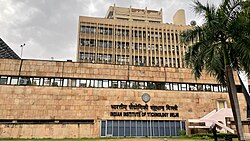
The Indian Institute of Technology Delhi (IIT Delhi) is one of India’s leading public institutes of technology, established in 1961 and recognised for world-class engineering, science and interdisciplinary research. Designated an Institution of Eminence, the institute combines rigorous undergraduate and postgraduate programmes with high-impact research centres, extensive industry partnerships and a strong track record of technological innovation and entrepreneurship.
Located in the Hauz Khas area of South Delhi, IIT Delhi’s urban campus offers a vibrant academic environment with modern laboratories, specialised research schools, residential hostels, sports and cultural facilities, and multiple satellite campuses (Sonipat and Jhajjar) as well as an emerging international campus in Abu Dhabi. The institute’s accomplished faculty, global collaborations and an influential alumni network of technologists, entrepreneurs and public leaders sustain its reputation as a national and international centre of excellence.