Mode and time commitment
- Mode
- Live Online & Campus Immersion
- Duration
- 5 Months
- Learning hours
- 120
Offered by Indian Institute of Technology Delhi
A 5‑month live online executive programme by IIT Delhi combining 40% theory and 60% hands‑on practice to train engineers, technologists and entrepreneurs to design, prototype and deploy robotic systems using ROS, AI/ML, CAD, Arduino and Raspberry Pi.

Indian Institute of Technology Delhi
Global robotics adoption is reshaping industries from healthcare to automotive and space exploration. This executive programme provides a compact, application-focused pathway from fundamentals to advanced robotics topics, combining IIT Delhi academic rigor with industry-relevant tools and practices.
Over five months participants attend live online sessions (Direct to Device) and engage in practical tutorials and a capstone project to develop one functional robot. The curriculum covers core technologies—sensing & perception, actuators and motion, ROS, AI/ML, embedded control, CAD/3D modelling and safety/ethics—preparing professionals to lead robotics initiatives and apply automation in production, R&D and product development.
Learners also have the option of a one‑day on‑campus immersion at IIT Delhi for direct faculty interaction; career support modules (offered by TimesPro) include personal branding, resume review and interview preparation.
Key highlights and core differentiators that set this program apart.
Learn directly from IIT Delhi faculty and eminent industry experts
Build a functional robot from research to prototype
Balanced 40% theory / 60% practical, hands-on curriculum
Core technology focus: ROS, AI/ML, CAD, Arduino & Raspberry Pi
Optional 1‑day campus immersion at IIT Delhi
Core capabilities, strategic skills, and managerial frameworks you will acquire.
Essential delivery mode, timeline, and candidate eligibility at a glance.
Comprehensive breakdown of course modules, masterclasses, and hands-on projects.
Introduction to robotics in industry and society, historical perspectives
Classification of robots and overview of current research in robotics, applications of AI/ML
Robotics market, current challenges, and opportunities
System-level architecture of robots: Levels of autonomy
Fundamental concepts of robots: Components, joints, coordinate systems, workspace
Kinematics and kinetics of robots
Dynamics of a robot: Trajectory and path
Role of interoceptive and exteroceptive sensing
Position, velocity, and acceleration sensors
Force and torque sensing
Robotic tactile sensors and soft haptics
Non-contact sensing using Ultrasonic, LIDAR, and RADAR
Camera-based robotic sensing and machine vision
Computational models and methods for processing sensor information
Role and characterisitics of robotic actuators
Electrical motors: Servos, stepper motors and drive mechanisms
Pneumatic and hydraulic actuators
Soft robotic actuators
Electroactive polymers, shape memory actuators, and emerging paradigms
Biomimetic actuators, artificial muscle technology and wearable actuators
Role of 3D printing and mechanical testing in robotic fabrication
Localisation, navigation, and environment representation
Designing of robotic components using CAD
Introduction to Robot Operating System (ROS)
3D robot modelling, motion planning, and simulation in ROS
Interfacing hardware and sensors to ROS
Introduction to the role of machine learning in robotics: Software architecture, behavior-based systems
Neural networks and genetic algorithms in robotics
Introduction to Deep Learning and applications in robotics
Introduction to embedded computing and control
Introduction to embedded hardware platforms: Arduino and Raspberry Pi
Programming and interfacing of sensors and actuators
Wired and wireless communication systems: MODBUS, CAN, and other paradigms
Multi-tasking and closed-loop control of robots
Introduction to bio robotics and bionics: Exoskeleton device, prosthetics and surgical robotics
Humanoid robots: Future directions in automation
Human-Robot Interaction (HRI) and Collaboration: Collaborative robotics
Manufacturing automation using industrial robots: The next industrial revolution
Safety standards in industrial robotics
- Roboethics: Navigating the ethical use and pitfalls of robotics and AI
Designing on CAD
3D Printing
Arduino Programming
AI/ML in Robotics
DIY Robotics
ROS Training
*Tutorials provided by IIT Delhi coordinators, as a part of project sessions on 5 Sundays.
Development of one robot per participant, with detailed research, specifications, design, and prototype. A development kit can be purchased as a part of the programme. *Learners will bear the cost of the development kit.
Career support modules (offered by TimesPro): Personal Branding, Business Communication, Job Search Strategy, Interview Preparation (pre/in/post) and resume review; note that career support is provided by TimesPro and IIT Delhi is not responsible.
Format, class schedules, campus immersion details, and evaluation criteria.
There will be an optional one-day campus immersion for interaction between faculty and learners at IIT Delhi campus.
*Travel and accommodation cost will be borne by the learners. IIT Delhi will not be responsible for the same.
Certificate criteria:
Eligibility criteria, work experience requirements, and admission steps.
Key application deadlines, batch commencement dates, and intake schedules.
| Application Deadline | 7 November 2026 |
|---|---|
| Program Start Date | 30 January 2027 |
Tuition fees, flexible installment schedules, and available financing options.
| Fee or instalment | Amount | Due date / terms | Notes |
|---|---|---|---|
| Programme Fee | ₹1,69,000 | — | Base programme fee (exclusive of GST). |
| GST @ 18% | ₹30,420 | — | GST charged extra; example total shown ₹199,420. |
| Total Fee | ₹1,99,420 | — | Programme fee + GST (example calculation shown). |
| Application Fee | ₹1,000 | To be paid at the time of Application | Non-refundable; will not be adjusted in total programme fee. |
| 1st Instalment | ₹59,000 | Within 4-days of offer letter rolled out | Amount exclusive of GST (instalment table for 2027 cohort). |
| 2nd Instalment | ₹55,000 | 6 March 2027 | Amount exclusive of GST. |
| 3rd Instalment | ₹55,000 | 6 April 2027 | Amount exclusive of GST. |
Taxes & totals
Application fee & instalments
Refund & withdrawal
Miscellaneous
Easy EMI options available; loan and EMI options are services offered by TimesPro (IIT Delhi not responsible).
Common queries about the program, admissions, curriculum, and policies.
The CEP, IIT Delhi Executive Programme in Robotics provides hands-on exposure to robotics technologies, including sensors and perception, actuators, motion control, embedded systems, ROS, AI/ML and robotic system development. Participants also get an opportunity to build a functional robot, gaining practical experience with tools such as Arduino, Raspberry Pi, CAD and 3D printing.
Yes. The CEP, IIT Delhi Executive Programme in Robotics is designed to build knowledge from the fundamentals of robotics and automation while progressively introducing advanced concepts and practical applications. Professionals from relevant technical and interdisciplinary backgrounds can use the programme to develop a structured understanding of robotics.
The CEP, IIT Delhi Executive Programme in Robotics follows a blended learning approach with approximately 40% theory and 60% practical learning. Participants learn core robotics concepts and apply them through hands-on activities, tools, projects and real-world applications.
Yes. The CEP, IIT Delhi Executive Programme in Robotics covers AI and Machine Learning as part of its robotics curriculum, helping participants understand how intelligent technologies can be integrated with robotic systems for applications involving perception, decision-making and automation.
The CEP, IIT Delhi Executive Programme in Robotics develops skills relevant to industries adopting robotics and automation, including manufacturing, automotive, healthcare, logistics, agriculture and other technology-driven sectors. The programme can help professionals understand how robotic systems can be designed and applied to industry-specific use cases.
Yes. The CEP, IIT Delhi Executive Programme in Robotics includes practical learning and project-based exposure, including the development of a functional robot. Participants work with technologies such as CAD, Arduino, Raspberry Pi, 3D printing and ROS to gain practical experience in building and working with robotic systems.
Candidates who score at least 50% marks overall and have a minimum attendance of 50% will receive a 'Certificate of Successful Completion'. Candidates who score less than 50% marks overall and have a minimum attendance of 50% will receive a 'Certificate of Participation'. The organising department for this programme is the Centre for Biomedical Engineering, IIT Delhi. Only e‑certificates will be issued by CEP, IIT Delhi.
Indian Institute of Technology Delhi Certificate


Indian Institute of Management Calcutta
Closing soonExecutive programme for product professionals delivered live online with campus immersions that builds AI-e...
Indian Institute of Management Calcutta
Tech partner: TimesPro

Michigan State University
Closing soonAn online 24-week certificate by Michigan State University for managers and leaders combining self-paced mo...
Michigan State University
Tech partner: TimesPro

Indian Institute of Management Kozhikode
Closing soonA 12-month live online programme with a two-day campus immersion that prepares mid-to-senior managers to le...
Indian Institute of Management Kozhikode
Tech partner: TimesPro
Indian Institute of Management Calcutta
Closing soonA 12-month executive programme for experienced professionals moving from functional expertise to strategic ...
Indian Institute of Management Calcutta
Tech partner: TimesPro
About the primary institute
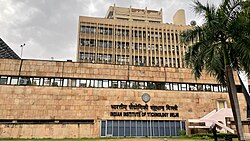
The Indian Institute of Technology Delhi (IIT Delhi) is one of India’s leading public institutes of technology, established in 1961 and recognised for world-class engineering, science and interdisciplinary research. Designated an Institution of Eminence, the institute combines rigorous undergraduate and postgraduate programmes with high-impact research centres, extensive industry partnerships and a strong track record of technological innovation and entrepreneurship.
Located in the Hauz Khas area of South Delhi, IIT Delhi’s urban campus offers a vibrant academic environment with modern laboratories, specialised research schools, residential hostels, sports and cultural facilities, and multiple satellite campuses (Sonipat and Jhajjar) as well as an emerging international campus in Abu Dhabi. The institute’s accomplished faculty, global collaborations and an influential alumni network of technologists, entrepreneurs and public leaders sustain its reputation as a national and international centre of excellence.